½ Key Stage 3 Maths
Strong foundations, so GCSE feels natural.
Years 7 to 9 are where maths confidence is won or lost. Patient 1-on-1 sessions secure the core skills early, fix small gaps before they grow, and help students actually enjoy the subject.
Year groups
Years 7–9
Ages
11–14
Focus
Core skills & confidence
Follows
The KS3 curriculum
Format
1-on-1, live online
What we cover
Building blocks for everything that follows
Sessions can mirror what’s being taught in class, or step back to make earlier topics secure, whichever helps most.
Number
- Place value & negative numbers
- Fractions, decimals & percentages
- Powers, roots & standard form
Algebra
- Simplifying & expanding expressions
- Solving linear equations
- Sequences & straight-line graphs
Ratio & proportion
- Simplifying & sharing ratios
- Percentage change & best buys
- Speed, distance & time
Geometry & measures
- Angles & polygons
- Area, perimeter & volume
- Transformations & Pythagoras
Statistics & probability
- Averages & range
- Charts & graphs
- Simple probability
Habits & confidence
- Setting out working clearly
- Checking answers
- Tackling unfamiliar problems
Looking ahead
The GCSE topics we build towards
Strong KS3 skills lead straight into the topics that matter most at GCSE. Here’s a taste of where we’re heading.
GCSE · A-Level
Quadratic Equations
From factorising to the quadratic formula and completing the square, and knowing which method to reach for. We connect the algebra to the graph, so roots, turning points and the discriminant all make sense together.
- Factorising, including when a ≠ 1
- Completing the square & turning points
- The quadratic formula & the discriminant
- Quadratic inequalities & sketching graphs
- Disguised quadratics at A-Level
Δ = b² − 4ac = 16, so there are two distinct real roots: x = −1 and x = 3. Turning point (1, −4), a minimum.
GCSE · A-Level
Simultaneous Equations
Solving two equations at once by elimination, substitution and graphically. We then extend to one linear and one quadratic equation, a favourite for high-mark GCSE and A-Level questions.
- Elimination & substitution methods
- Graphical solutions & points of intersection
- Linear–quadratic pairs
- Forming equations from worded problems
KS3 · GCSE · A-Level
Algebra
Algebra is the language the rest of maths is written in. We make it fluent: expanding, factorising, rearranging and reasoning, so that nothing later on feels like a foreign language.
- Expanding & factorising expressions
- Solving linear equations & inequalities
- Rearranging formulae
- Algebraic fractions & proof
- Functions, including composite & inverse
Solve 3(x − 2) + 5 = 2x + 7
- 3x − 6 + 5 = 2x + 7expand the bracket
- 3x − 1 = 2x + 7tidy up
- x − 1 = 7subtract 2x
- x = 8check: 23 = 23 ✓
GCSE · A-Level
Circle Theorems
Circle theorems reward students who can see the structure in a diagram. I teach each theorem visually, then we practise spotting which ones apply and writing the reasons examiners want to see.
- Every GCSE circle theorem, with proofs
- Spotting theorems in complex diagrams
- Writing geometric reasons for full marks
- Equations of circles at A-Level
GCSE · A-Level
Exam Technique
Knowing the maths is only half the battle. We practise reading questions carefully, setting out working for method marks, managing time and checking answers, using real past papers from your exam board.
- Command words & what examiners expect
- Setting out working to earn method marks
- A timing strategy for each paper
- Targeted past papers & mark-scheme review
- Calculator skills & checking strategies
By completing the square, find the coordinates of the turning point of y = x² − 4x + 1. [3 marks]
y = (x − 2)² − 3M1
Turning point (2, −3)A1 A1
- Underline the command word
- Show each step for method marks
- Budget about a minute per mark
Inside a session
Live, focused and entirely yours
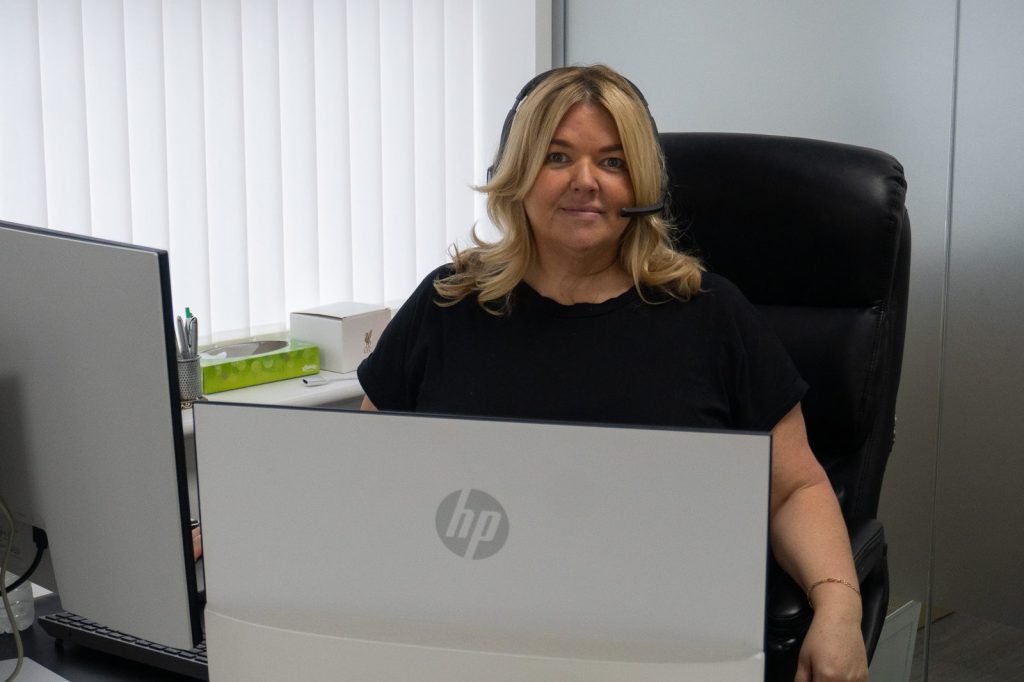
Every lesson happens live online, with a shared whiteboard so we can work through problems together, step by step. There’s time to ask every question, revisit anything unclear and practise until it clicks.
- Taught by a BSc Mathematics graduate
- Always 1-on-1
- A holistic approach that builds confidence
- UK & international time zones
- Matched to your exam board
- Sibling packages available
Is Key Stage 3 too early to start tutoring?
Not at all. Gaps are far easier to fix before GCSE content arrives, and students who start Year 10 feeling secure tend to find the whole course less stressful.
What if my child doesn’t enjoy maths?
That’s very common, and usually a confidence issue rather than an ability one. Sessions start from what the student can already do, so they experience success early and build from there.
Do you follow what’s taught at school?
Yes, sessions can mirror the school’s scheme of work, support homework topics, or revisit earlier material that needs strengthening.
Ready when you are.
Book a relaxed introductory chat, or send a message with any questions.